CASE STUDY — UX/UI DESIGN & MOTION
+(ALL ABOARD!)
52% of Gen-Z stopped speaking to each other after a terrible trip.
TEAM
Maxine Curva
Lucas Meir
ROLE
UX Research, UI Design & Motion
TIME
10 Weeks


THE PROBLEM
GROUP PLANS BREAK DOWN QUICKLY
Deciding what to do as a group often turns into long message threads with no clear outcome. There are no existing non-sticky tools to support group decision-making during group travel. This leads to slow decision-making and in some cases, conflict.
THEY RELY ON:
— Back-and-forth conversations
— Manual coordination
— Uneven contribution
THE GOAL
EFFORTLESS DECISION MAKING
01.
Create a tool that takes group dynamics into account
02.
Help travelling groups reduce friction.
03.
Create a non-sticky tool that doesn't take them out of their travel experience
USER RESEARCH
WHAT DID THE BACKPACKERS THINK?

We interviewed 30 backpackers aged 18-24 across 2 different hostels and found some recurring pain-points. At the end of the day, everyone wants a fun, stress-free group outing.
01.
Hidden power dynamic in groups
02.
Planning responsibilities are unclear
03.
Decision-making is difficult for all
04.
Different planning styles
PERSONAS
WHO ARE OUR USERS?
There is a hidden power dynamic in group planning. Planning responsibilities and roles are often unclear. Decision-making is exhausting for everyone and different planning styles often lead to conflict. However at the end of the day, everyone wants a fun, stress-free group outing.
PLANNING PATRICIA
Frustrated she always does a bulk of the planning
Others ignoring messages
Disagreements with friends over sticking to the plan
Panics when plans fall through
Has to use many different platforms
GREGORY
Has never travelled without his parents before
Overwhelmed by long chats and decision-making
Prefers spontaneity and doesn't like to plan
Not accustomed to travelling
Regrets not speaking up about preferences before
THE ECOSYSTEM
We designed an ecosystem that marks various touchpoints users encounter when going on a trip, from being inspired to take the trip to research to being inspired for your next trip. We found that group planning happens throughout, most tools don't take groups into account and there is a massive gap in the market for a group planning tool.

COMPETITIVE RESEARCH
WHO ARE OUR COMPETITION?
We compared Wanderlog, Flickmate, Splitwise, WhatsApp Polls and Instagram Polls across voting on existing content, suggesting activities, creating and maintaining multiple groups, easily adding and removing members, adding temporary members, and pricing. No single tool covered group decision-making end-to-end.
PLATFORM COMPARISON
WANDERLOG
FLICKMATE
SPLITWISE
POLLS
POLLS
Voting on existing content
✓
Suggesting activities
✓
✓
Creating and maintaining multiple groups
✓
✓
✓
✓
Easily adding & removing members
✓
✓
✓
✓
Adding temporary members
Free
✓
✓
✓
SITEMAP
MAPPING IT OUT
Userflow
HOW WILL GROUPS EXPERIENCE THE APP?
We mapped the end-to-end flow of a group creating a trip together, from creating the group and adding a first friend to inviting temporary members via QR code, adding locations, and confirming the group. The flow surfaces every branch point where a group typically breaks down and gives users a clear next action at each one.
Low-fidelity
SKETCHING IT OUT
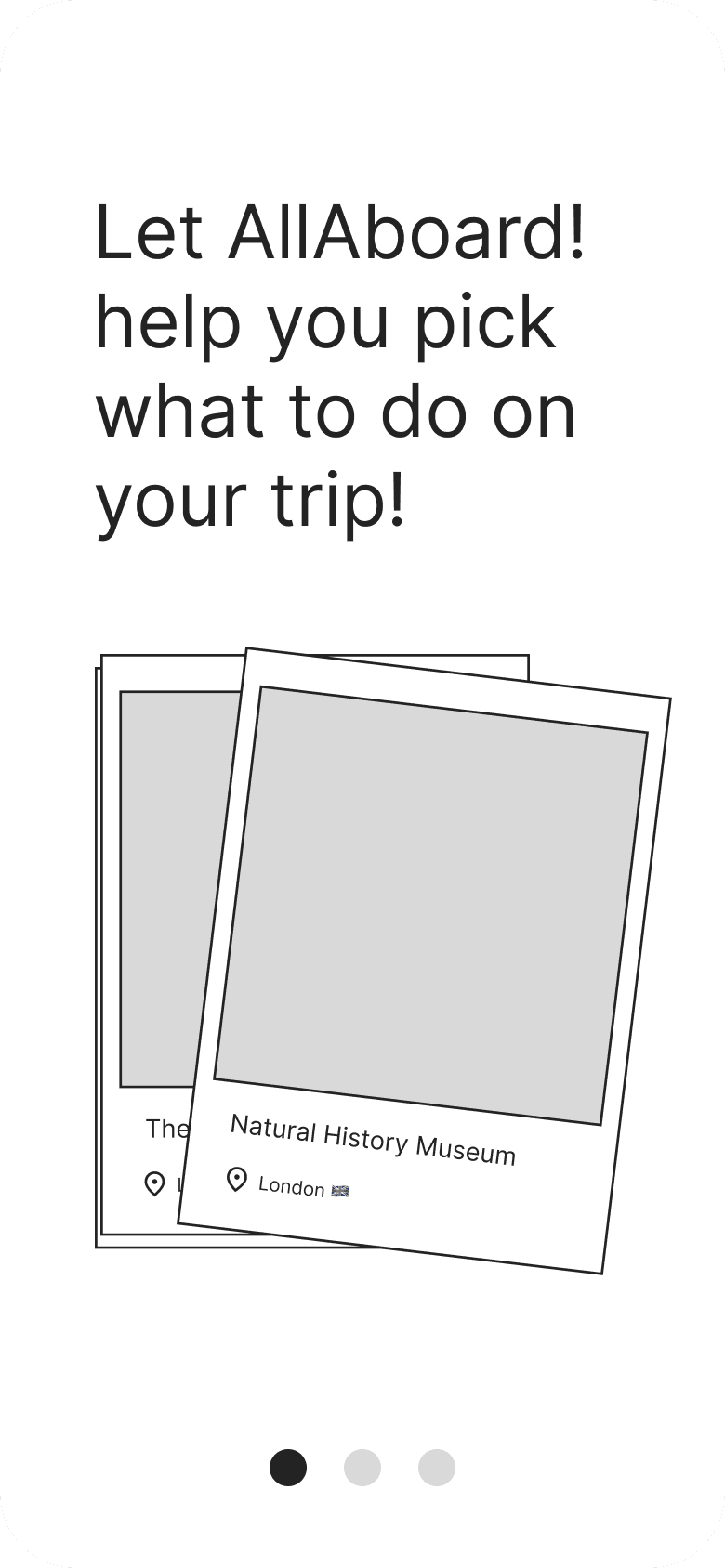
We started with fast, low-fidelity sketches to test the core flow, onboarding, the main matches page, and the suggestion swipe interaction, before committing to any visual design.


FINAL DESIGN
THE OUTCOME
A curated Gen-Z-first design system built around movement, tactility, and clarity. Every screen removes friction from the group decision-making process. The style and branding were further defined as we continued working on the screens.


MOTION DESIGN
HOW DOES IT ANIMATE
nimation was used throughout the interface to make interactions feel more intuitive, responsive and playful. Subtle transitions provide feedback, reinforce hierarchy and help guide users from one swipe to the next, while keeping the overall experience light and engaging.
TO CONCLUDE
KEY TAKEAWAYS